
Are Inflatable Rentals Safe? What Every Parent and Event Organiser Needs to Know
Bouncy castles, inflatable slides, climbing walls, meltdown arenas they're the centrepiece of practically every kids' party and outdoor event in the UK. But before you book one, it's completely reasonable to ask: are inflatable rentals safe?
The short answer is yes when they're operated correctly, by reputable suppliers, following UK regulations. The longer answer involves understanding what good practice looks like, what the law says, and how to spot a hire company you can actually trust.
Let's break it down.
What the UK Law Says About Inflatable Hire Safety
This is where most people are surprised. Inflatable rentals used commercially in the UK are covered by real, enforceable law not just suggestions.
The Health and Safety at Work etc. Act 1974 requires that any inflatable used by members of the public for entertainment purposes is tested at regular intervals by a competent person. On top of that, the Provision and Use of Work Equipment Regulations 1998 (PUWER) requires annual testing of all commercial inflatables.
The relevant British Standard is BS EN 14960:2013, which sets out the design, manufacture, and safe setup requirements for inflatable play equipment. Any inflatable used commercially in the UK should meet this standard.
The Health and Safety Executive (HSE) recognises two main inspection schemes:
-
PIPA (Inflatable Play Inspection Scheme) — a national database and tagging system where inspected inflatables receive a unique numbered tag you can verify online at pipa.org.uk
-
ADIPS (Amusement Device Inspection Procedures Scheme) — covers a broader range of inflatable and fairground equipment
These aren't optional extras. If a hire company cannot show you a current PIPA tag or an ADIPS Declaration of Compliance (DoC), that's a serious red flag.
How to Check If an Inflatable Rental Is Safe Before You Book
Here's a quick checklist you can run through before handing over any money.
Ask these questions:
-
Does the equipment carry a valid PIPA tag or ADIPS DoC?
-
Has it been tested within the last 12 months by an RPII-registered inspector?
-
Does the operator carry Public Liability insurance?
-
Will a trained supervisor be present, or will operating instructions be provided?
-
Has the blower been PAT tested?
You can verify a PIPA tag number directly on the PIPA website. Each tag carries a unique number tied to an entry in the national database, showing when it was last inspected and by whom. If the number isn't on the database, walk away.
The RPII (Register of Play Inspectors International) is the body that accredits the inspectors themselves. An inspector who has passed RPII examinations and is registered on their database is what the HSE considers a "competent person" for these inspections.
What Are the Most Common Causes of Inflatable Injuries?
Most incidents involving bouncy castles and inflatables are preventable. They tend to happen for a handful of reasons.
Wind. The HSE is clear on this: no inflatable should operate in winds above 24 mph (Force 5 on the Beaufort Scale). Hire companies should use an anemometer not a weather app on their phone to measure wind speed at the actual site.
Overcrowding. Every inflatable has a maximum user capacity set by the manufacturer. Too many people on at once creates unpredictable bouncing patterns and increases the risk of collisions.
Unsupervised use. The HSE requires at least one suitably trained person to provide constant supervision. If nobody is watching what's happening on or around the inflatable, the risk of injury rises sharply.
Inadequate anchoring. When used outdoors, all anchor points must be secured with metal ground stakes the HSE specifies at least 380 mm long and 16 mm wide, with a rounded top and a welded metal ring. An inflatable that isn't properly anchored can shift or tip in even moderate wind.
Low-quality equipment. There's a meaningful difference between a commercial-grade inflatable built to BS EN 14960 and a domestic toy sold online. Domestic inflatables are not designed to carry multiple adults or children simultaneously, and they're far more likely to fail under repeated use.
What a Reputable Inflatable Hire Company Should Provide
When you book from a professional inflatable hire company, there's a standard you should expect as a minimum.
The equipment should arrive clean, properly inflated, and visually checked before use. The supplier should be able to provide documentation showing the inflatable has been annually tested. The blower should be PAT tested and positioned at least 1.2 metres away from the inflatable this reduces the risk of electrical injury if a user comes into contact with it.
The hire company should also give you clear operating instructions. These should cover maximum user numbers, age and height restrictions, weather limits, supervision requirements, and what to do in the event of a power cut or sudden deflation.
Speaking of which: before each use, the deflation rate of the inflatable should be tested. Switch the blower off and watch how quickly it deflates. If it collapses so fast that users couldn't safely exit, it should not be operated.
Are Inflatable Rentals Safe for Children Specifically?
This is the question most parents are actually asking. And yes, inflatables are generally safe for children when the right safeguards are in place.
A few practical points worth knowing:
-
Separate age groups where possible. Mixing very young children with older, heavier users is a common cause of minor injuries. Most operators recommend keeping toddlers and older children separate.
-
No shoes, sharp objects, or glasses. These cause the majority of lacerations and surface damage.
-
No climbing on the walls. It's a common cause of falls.
-
Keep users off the inflatable while it's inflating or deflating. This is a significant safety risk that's often overlooked at informal events.
-
Don't use in wet weather unless the inflatable is specifically designed for wet play. Wet surfaces become slippery fast.
The companies that take this seriously also provide safety mats at the entrance and exit points of slides and castle openings. This is a recognised best practice across the industry.
The Difference Between a Safe Hire Company and a Risky One
Here's a useful rule of thumb: if a company is noticeably cheaper than every other supplier in your area and cannot show you any paperwork, be cautious. Annual PIPA testing, RPII-certified inspectors, PAT testing, and Public Liability insurance all cost money. Companies that skip these steps often pass the savings on but the risk passes to you and your guests.
A reputable hire company will be transparent about their certifications. They'll answer questions about their safety checks without hesitation. They'll have public liability insurance in place. And they'll provide clear written instructions about safe operation including weather limits and supervision requirements.
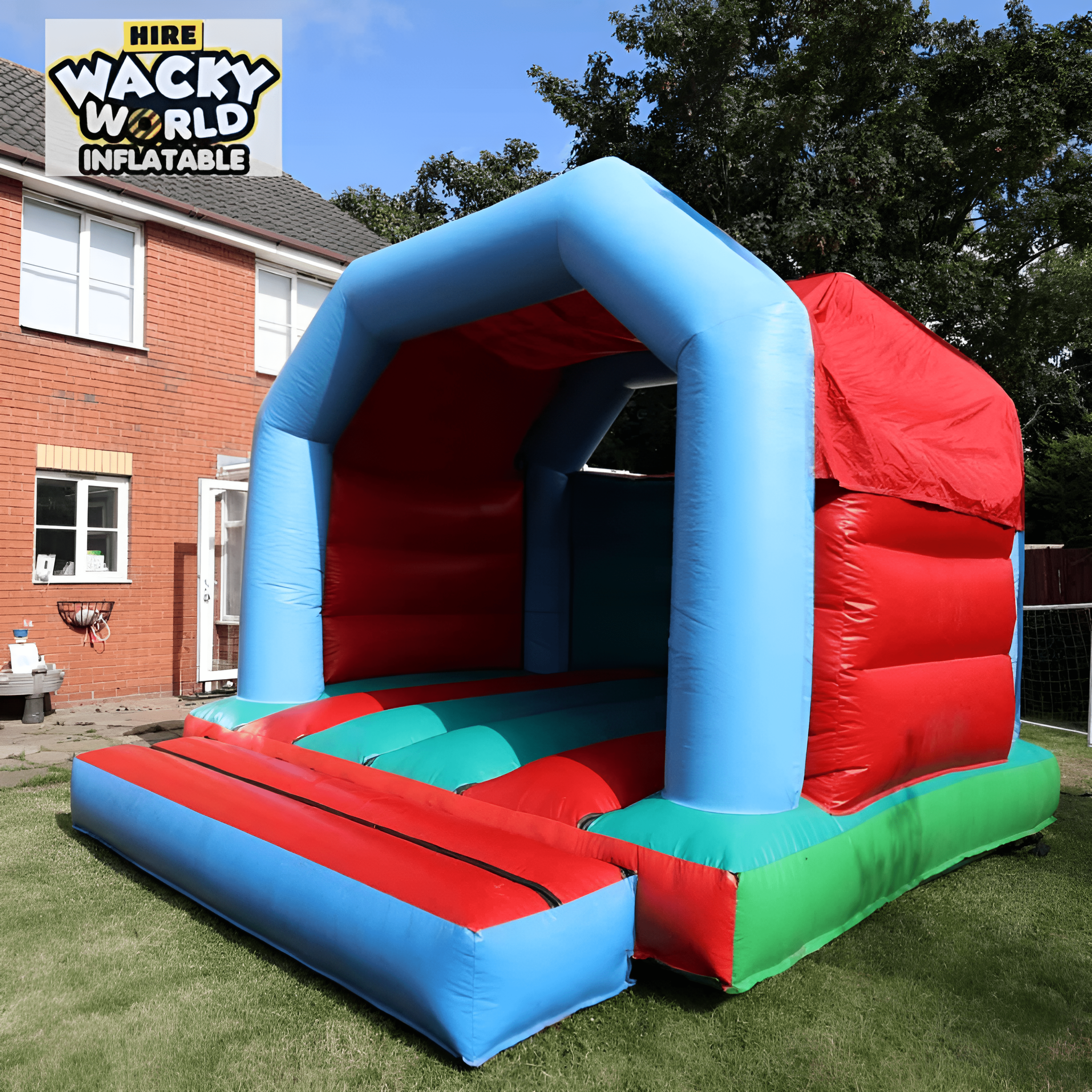
At Wacky World Hire, based in Preston and operating across the region, the focus is on professionally maintained equipment across a range of inflatable options from bouncy castles for all ages to climbing walls, base jumps, and interactive inflatables like the Meltdown and Hungry Hippos. Choosing a hire company with an established track record and genuine customer reviews is one of the simplest ways to reduce risk.
What to Do on the Day: A Safety Checklist for Event Organisers
If you're running an event, a birthday party, school fete, corporate day here's what to check on the day itself.
-
Confirm the inflatable is fully and evenly inflated before anyone gets on.
-
Check that all anchor points are secured with proper ground stakes.
-
Test the deflation rate before first use (switch the blower off, watch it deflate, confirm it's slow enough for safe exit).
-
Measure wind speed at the site. If it's above 24 mph, shut it down.
-
Assign a supervisor who stays at the inflatable throughout the session.
-
Enforce user limits. Keep track of how many people are on at once.
-
Brief users on the rules before they get on no shoes, no climbing walls, no somersaults.
It's also worth knowing where the nearest first aid kit is. Minor bumps are common at any active event, and being prepared makes a difference.
Final Thought
Inflatable rentals are safe genuinely so when they come from companies that take their legal and professional responsibilities seriously. The regulation framework in the UK is well structured: BS EN 14960, PIPA tagging, RPII-certified inspectors, PUWER annual testing. When all of that is in place and a trained supervisor is on hand, the risk profile of a commercial inflatable is very low.
The risk goes up when corners get cut: no certification, no insurance, domestic-grade equipment passed off as commercial, no supervision. Your job as the event organiser is to ask the right questions before you book.
If you're looking for inflatable hire in the Preston area, Wacky World Hire is a good place to start, they've been running inflatable operations in the region for years and have the reviews to show for it.
FAQs: Inflatable Rental Safety
1. Do I need to check a bouncy castle's safety certificate before hiring?
Yes. Any commercial inflatable in the UK should have been tested within the last 12 months by an RPII-registered inspector. Ask to see the PIPA tag or ADIPS Declaration of Compliance before you confirm your booking. You can verify the tag number on the PIPA website at pipa.org.uk to check the inspection is genuine and current.
2. Are inflatable rentals safe to use in the rain?
Standard dry inflatables become slippery when wet and should not be used in rain. Some inflatables are specifically designed for wet use. Always check with your hire company before the event. If rain starts mid-hire, users should be removed from the inflatable until conditions improve or the hire ends.
3. What wind speed is too dangerous for a bouncy castle?
The HSE sets the limit at 24 mph (Force 5 on the Beaufort Scale). At this wind speed, small trees in leaf begin to sway. Your hire company should use a physical anemometer to check wind speed at the site not a smartphone weather app, which doesn't account for local conditions.
4. How many children can use a bouncy castle at the same time?
This depends on the specific inflatable. Every unit has a manufacturer-set maximum capacity, which the operator's manual will specify. Exceeding this limit is a leading cause of inflatable-related injuries. A reputable company like Wacky World Hire will provide clear guidance on capacity limits for each piece of equipment.
5. What happens if the power cuts out during use?
A properly maintained commercial inflatable will deflate slowly enough to allow users to exit safely. Operators are required to test the deflation rate before each use. If an inflatable deflates so quickly that it collapses before users can get out, it must not be used. This is a specific requirement under the HSE's guidance on inflatable play equipment.